
The argument
Stock photography is the cheapest thing on your site and the most expensive.
We are not against stock on principle. There are places it is entirely sensible. But on the pages where somebody is deciding whether to trust you, a stock photo quietly says something you would never say out loud: there was nothing here worth photographing.


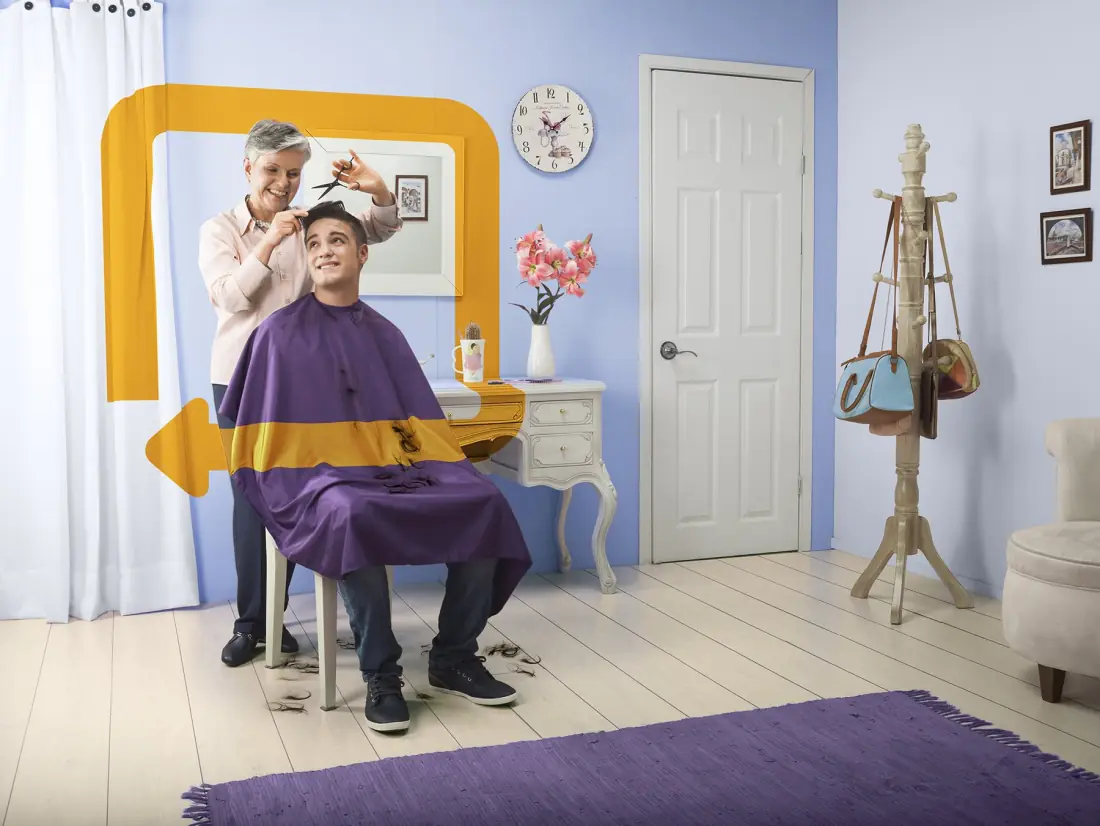
People recognise it, even when they cannot name it
Nobody visits a website and thinks "that is a stock photograph". What happens is faster and much less conscious. The room is too clean. The teeth are too white. Nobody in South Florida is wearing a cardigan. The handshake is happening in an office nobody has ever worked in.
The visitor does not articulate any of this. They just feel a tiny amount less certain, and they leave a little sooner, and the form does not get filled in. You never find out why, because nothing measurable broke.
The competitor with worse food and real photographs of it will beat you, and neither of you will ever know that is what happened.
The specific problem for a local business
Someone searching for a barber in Jupiter or a pest control company in Wellington is trying to answer one question: is this a real place run by real people near me. Stock photography answers that question badly. A photograph of your actual storefront, your actual crew and your actual van answers it instantly, and it is the only thing on the page that cannot be faked by a competitor.
Being fair about it
Where stock is genuinely fine
We use it ourselves in these places, and pretending otherwise would be silly:
- Abstract or conceptual images on a blog post, where no real photograph exists
- Backgrounds and textures that are doing no informational work at all
- Maps, diagrams and illustration
- Genuinely temporary placeholders during a build, replaced before launch
Where it is not fine is anywhere a visitor is forming a judgement about whether you are any good: your homepage hero, your services, your team, your product, your space, and every single photo on your Google profile. Google will remove stock from a Business Profile when customers report it, which tells you how they view it.
The new version of the problem
AI-generated images have made this worse, not better
The obvious move right now is to generate images instead of licensing them. It is faster and cheaper again, and for some things it genuinely works: abstract backgrounds, illustration, concept art.
For a local business it fails in a specific and expensive way. It produces a picture of a restaurant, not a picture of your restaurant. Everything that made the photograph worth having, the actual room, the actual people, the actual dish somebody is about to order, is precisely what a generated image cannot contain.
There is also a practical failure mode we hit constantly: generated images stamp garbled fake text onto signage, menus and packaging, and produce hands that do not survive a second look. On a page about your business, that is not a neutral cost.
The question was never whether the image is real. It is whether the image is of you.
| Doing what | Stock or generated | Real photography |
|---|---|---|
| Proving you exist | Actively works against it | Settles it instantly |
| Showing your actual product | Cannot | The entire point |
| Google Business Profile | Gets removed | What Google wants |
| Ad creative | Competitors are running the same file | Yours alone |
| Cost today | Nearly nothing | A real line item |
| Cost over two years | Every enquiry you never knew you lost | Falls every month it keeps working |
Photography by Allen Velasquez. Used with permission. See his portfolio
Common questions
Stock photography, answered
Does using stock photos hurt my SEO?
Not as a direct ranking penalty, and anyone quoting you one is making it up. The effect is real but indirect: stock imagery raises bounce rate and lowers conversion, and engagement signals do feed rankings. The bigger loss is simply the enquiry that never happened.
Can Google tell a photo is stock?
Google can certainly identify a widely-used image, since the same file appears on thousands of sites. More to the point, Google removes stock photography from Business Profiles when it is reported, which is a clear enough signal about how they treat it.
We cannot afford a shoot right now. What should we do?
Take the important photographs on a phone, in daylight, near a window, and use those. A slightly imperfect real photograph of your actual shop beats a flawless stock image every time. Fix the homepage hero and the Google profile first, and book a proper shoot when you can.
What about photos our supplier gives us?
Fine for a spec sheet, weak on a product page, because every other stockist is using the identical file. If you sell the same items as five other shops, your own photography is frequently the only reason somebody buys from you instead of them. More on product photography.
Keep going
Where to next
Next step
Let us look at what you have got.
Send over your website, your Google profile, whatever photography you already own. We will tell you straight what is worth keeping, what is costing you, and whether you need a shoot at all. No charge and no pitch attached to it.