
Where the photos go
Photos for a website are a different job from photos.
A photograph that looks superb full screen on a laptop can be useless as a website hero, because the layout crops it to a letterbox on desktop and a near square on a phone, and the subject falls straight out of both. That gets decided on the shoot day or not at all.

What usually goes wrong
A business pays for a proper shoot. The photographer delivers, and the work is genuinely good. Then the files land with whoever is building the site, and one of three things happens.
They get squashed. A 6000 pixel JPEG gets dropped in and scaled down by the browser, so the page now carries eight megabytes of photography and takes four seconds to show anything. The photos are the reason the site is slow, which is a miserable irony to explain to a client.
They get cropped wrong. The hero is a beautiful wide frame with the dish on the left. The mobile layout crops to the centre. Now it is a photograph of a tablecloth.
They get used once. Four images go on the homepage and the other 196 stay in a Dropbox folder forever.
The photography is rarely the weak link. What happens to it between the card and the page usually is.
On the day
Shooting for a layout you have already seen
We brief the shoot against the actual design, not against a vague idea of "we need some photos". That changes what gets framed.
- Every hero framed with room on all four sides, so the same file survives a wide desktop crop and a tall mobile one without losing the subject
- A horizontal, a vertical and a square of anything important, because those are the three shapes the internet will ask you for
- Clean negative space on one side of the frame where headline text has to sit
- Backgrounds kept deliberately simple on anything destined for a card or a thumbnail
- Shots that match the real brand colours, so a photograph does not fight the site it lands on
After the shoot
The unglamorous half, which is the half that decides your load time
Google measures how long your biggest visible element takes to paint, and on almost every site we touch that element is a photograph. Largest Contentful Paint is a ranking input and it is also just how fast your site feels. Getting photography right is usually the single biggest win available.
- Exported as WebP with a JPEG fallback, sized to what the layout actually renders
- Two or three widths per image, served with srcset so a phone never downloads a desktop file
- Width and height on every tag, so the page does not jump around while it loads
- Everything below the fold lazy loaded, and the hero explicitly not lazy loaded, which is the mistake that costs the most
- Honest, descriptive file names instead of DSC_0918
- A content hash in the URL, so a cached image can never go stale on a returning visitor
A real number, from a real site
On one client build the hero image alone was 4.1 MB. Re-exported as WebP at the size the layout actually renders it, the same photograph came out at 180 KB. Same picture, visually identical on a retina screen, about four percent of the weight. That one change took roughly two seconds off the mobile load.
There is a second trap that catches people who do everything else right. If you cache images hard for speed, which you should, then replacing a photo in place leaves every returning visitor looking at the old one for weeks. We stamp a content hash into the file URL so a changed photo is a changed address. Nobody notices when it works, and everybody notices when it does not.
The part everyone skips
Alt text is not a checkbox
Every image on a site needs alt text describing what is genuinely in the picture. It matters for three separate reasons and most people only know about one.
It is how a blind visitor experiences your photography, which is reason enough on its own, and it is also an accessibility obligation that lands on you and not on your web developer. It is how Google understands an image it cannot see. And it is increasingly how an AI assistant reads your page, because a model summarising your restaurant gets nothing at all from a file called IMG_4471.jpg.
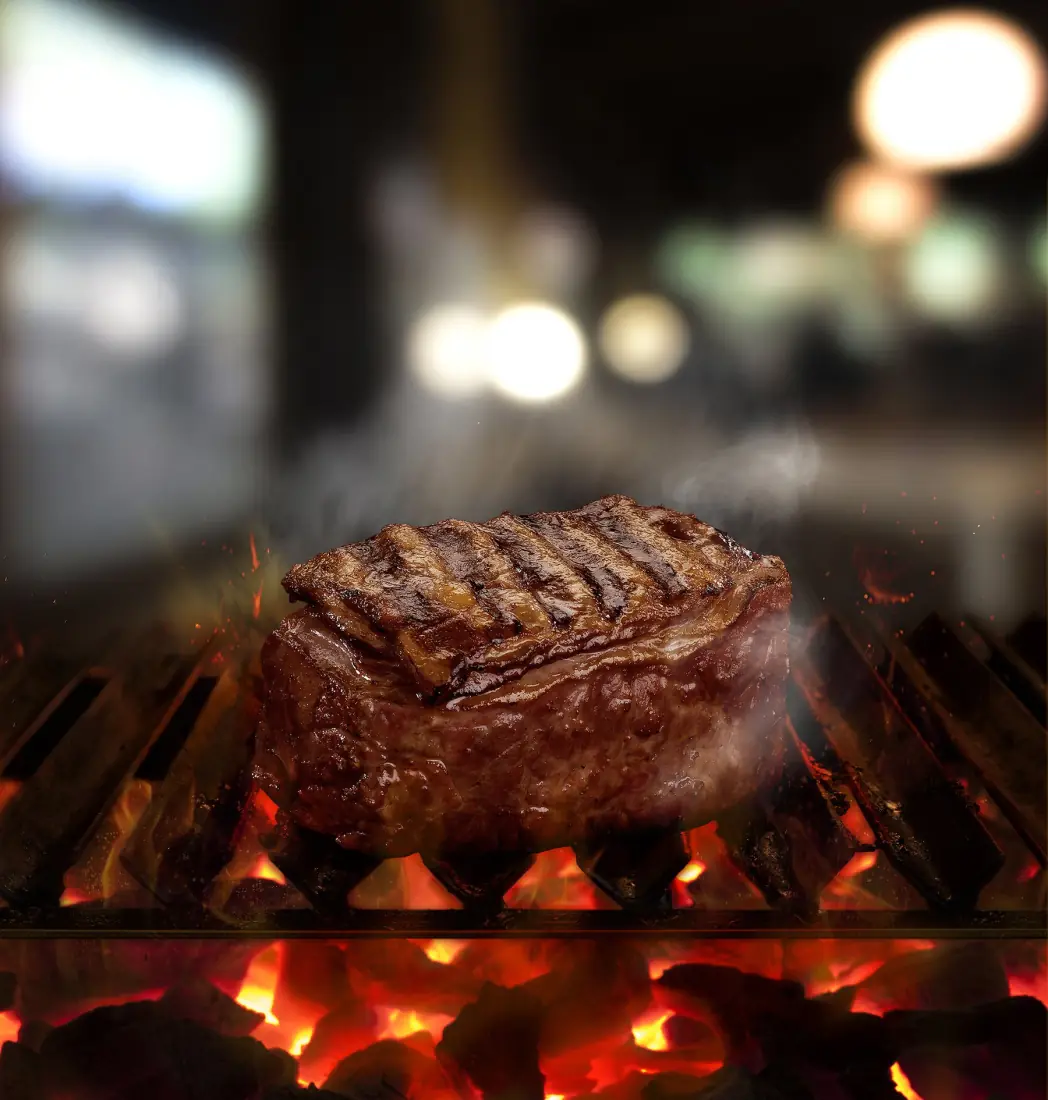
Written properly it reads like a sentence a person would say out loud. "A wood-fired parrilla at Lenos and Carbon, mid service" tells all three audiences something true. "restaurant food palm beach gardens best restaurant" tells them you are stuffing keywords, and Google has understood that trick since roughly 2005.
Photography by Allen Velasquez. Used with permission. See his portfolio
Common questions
Website photography, answered
How many photos does a small business website actually need?
Fewer than people expect, used far better. A strong hero, six to ten supporting images for the service or menu sections, three or four real photographs of the people, and one wide shot of the space. About twenty frames, chosen well, beats two hundred dumped into a gallery nobody scrolls.
Will adding photos slow my website down?
Only if they are handled badly, which is unfortunately the norm. Prepared properly a photograph-heavy page can load faster than a text-heavy one on a builder platform, because the photos are a few hundred kilobytes and the platform's own JavaScript is two megabytes. Our sites are hand coded partly for this reason.
Can you use the photos we already have?
Often, yes. Send them over. A surprising amount of the time the existing photography is fine and it is the preparation that is wrong, which is a much smaller bill than a shoot. We will tell you honestly which of your images are worth keeping.
Do stock photos hurt SEO?
Not directly, and anyone claiming a precise ranking penalty is inventing it. What they hurt is the human being deciding whether to trust you, and that shows up in your bounce rate and your conversion rate, both of which Google does pay attention to. We wrote the longer argument on stock versus real photography.
Keep going
Where to next
Next step
Let us look at what you have got.
Send over your website, your Google profile, whatever photography you already own. We will tell you straight what is worth keeping, what is costing you, and whether you need a shoot at all. No charge and no pitch attached to it.