What we shoot
If you sell your own judgement, put your face on camera.
A realtor, an interior designer, a contractor, an accountant. You have no hero dish and no product to light on a white sweep. What you are actually selling is that you know what you are doing. There is exactly one format that proves that, and it is you, on camera, answering a real question.

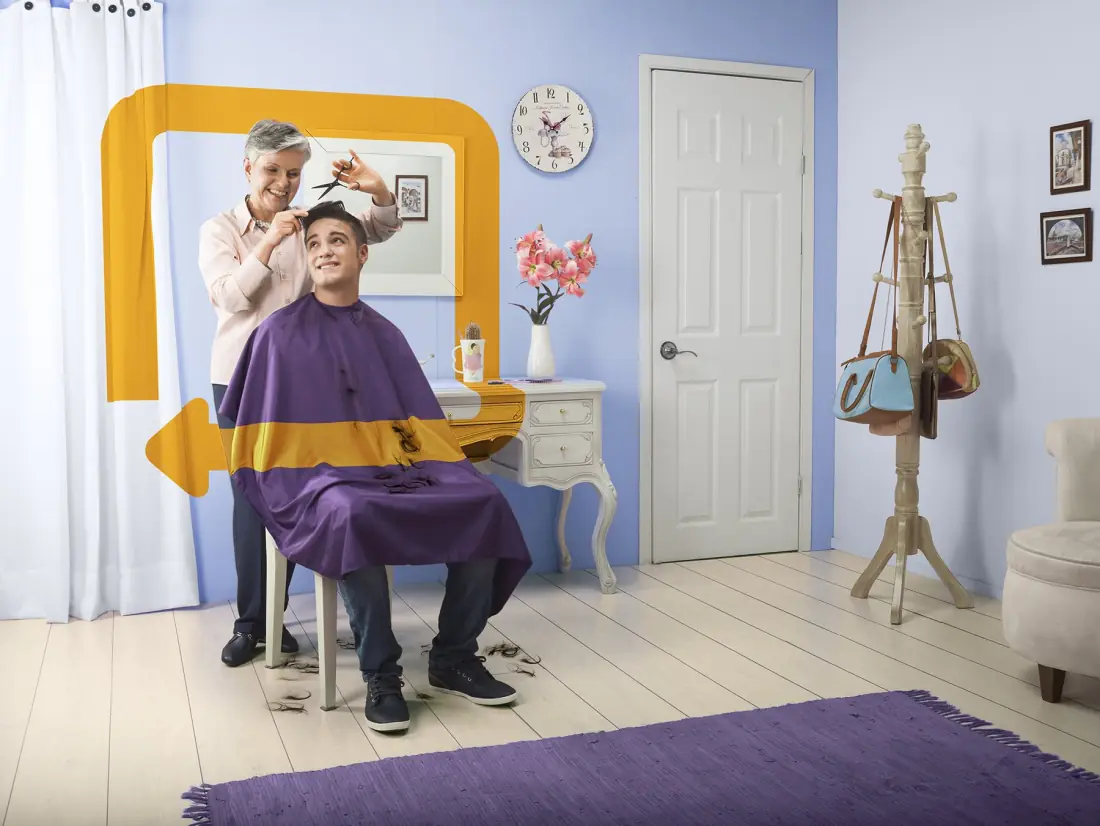
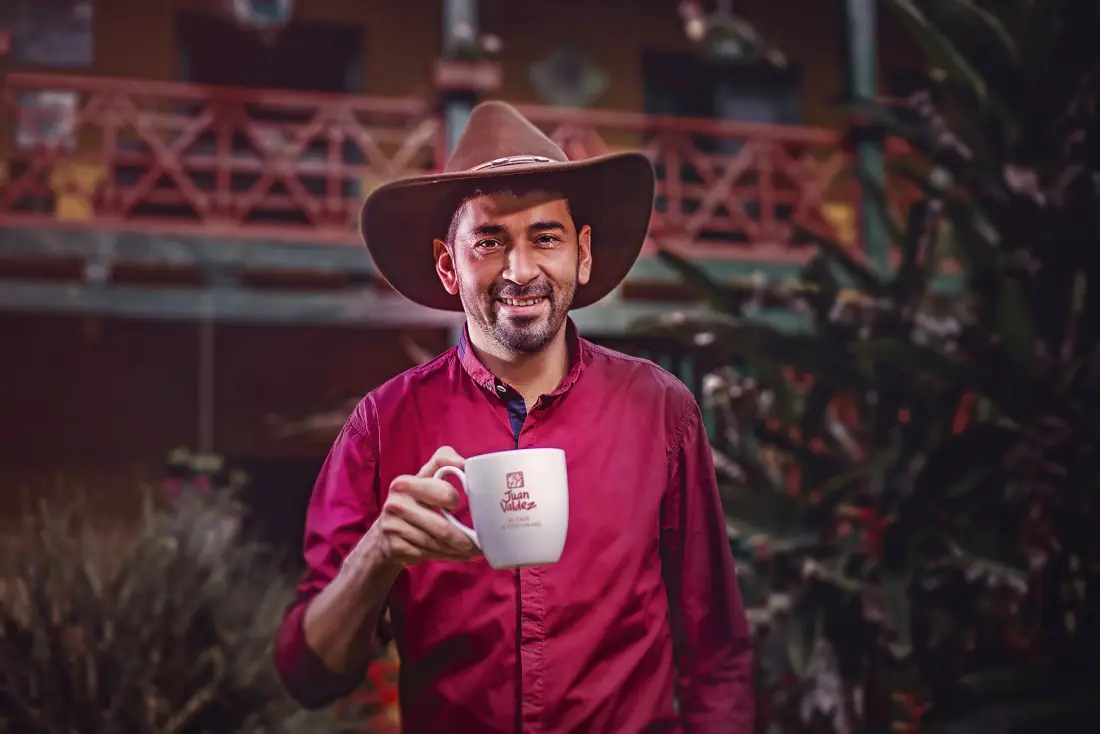
On location: an interview setup in a designer's own office, and a chef filmed mid service. Shot by Allen Velasquez for DV8 Web clients.
Why this beats everything else you could film
A service business has a trust problem, not an awareness problem. People can find you. What they cannot tell, from a website, is whether you are any good and whether they will like dealing with you.
Text cannot fix that, because anyone can write "twenty years of experience". Reviews help, but they are somebody else talking. Ninety seconds of you explaining why a kitchen renovation goes over budget, in your own words, settles it. The viewer is not evaluating your production values. They are deciding whether they would let you in the house.
Nobody hires a designer because the video was beautifully graded. They hire because they watched someone explain a problem they actually have.
And one session is a quarter of content
This is the part that makes it economic. Twenty minutes of answers cuts into twelve to fifteen separate clips, each one answering a single question. That is a month of social posts, a
I am terrible on camera. Is this really for me?
Almost everybody says this, and the ones who say it loudest often end up best, because they stop performing. It is a conversation, not a presentation. You are answering questions from a person standing next to the camera, not reading to a lens, and every stumble is edited out. Nobody sees the twenty minutes, only the good ninety seconds.
Do I need a script?
No, and a script is usually what ruins it. You get the questions ahead of time so you can think, not memorise. Read answers are immediately obvious to a viewer and they destroy the only thing this format has going for it, which is that you sound like a real person who knows the subject.
How long until we have the videos?
Usually a week to ten days for the full set, because editing is where the work is. If there is one clip you need urgently for a campaign, say so and that one comes first.
Can you film a client testimonial at their home?
Yes, and in front of the finished work is where it belongs. It needs their written permission, which we sort out before the day, and it is worth asking early because the willing client is the rate-limiting step, not the filming.
What if we want it in Spanish as well as English?
Straightforward, and often worth it in this market. Allen is a native Spanish speaker and runs the interview in either language. The usual approach is to ask the same questions twice rather than subtitle one version, because a dubbed or captioned answer never carries the same warmth.
What we ask you
The questions that actually produce usable answers
Not "tell us about your company". That question has never once produced a good clip. These are the ones that do, because they make you explain rather than present.
- What do clients get wrong about this before they call you?
- What is the most expensive mistake you see people make?
- Walk me through what actually happens in the first week
- What would you tell someone who is about to sign with the cheapest quote?
- Tell me about a job that went sideways and what you did about it
- What do you wish more people asked you before hiring?
- What is the part of this job nobody sees?
You get the questions in advance, and you do not memorise them. The good take is almost never the first one, and it is almost never the rehearsed one.
Two kinds
You on camera, and your client on camera
| You, interviewed | Your client, interviewed | |
|---|---|---|
| What it proves | That you know the work | That the work got done |
| Best placed on | Homepage, about, service pages, social | Landing pages, proposals, the moment someone hesitates |
| How many | One session covers a year | Two or three strong ones beat twenty weak |
| Hardest part | Getting past your own self-consciousness | Getting the client to agree and turn up |
| Shot where | Your office or a job site | Their home or business, ideally the finished work |
| Runs about | 60 to 90 seconds, cut from 20 minutes | 45 to 75 seconds |
If you can only do one, do yourself first. A client testimonial needs a client who is willing, available and articulate, and waiting for all three is how this never gets made.
On the day
What it takes, practically
- About two hours on site, most of which is lighting and sound rather than filming
- A room we can control a bit: a door that closes, and no air conditioning roaring
- Somewhere that looks like your work, not a blank wall. Your office, a job site, a finished project
- A lapel microphone, because audio is what makes video look cheap, not the camera
- Two angles running at once, which is what lets an answer be cut without a visible jump
- Plain clothes with no busy patterns or logos, and no need for anything special
- Cutaway footage of the space and the work, shot after, to lay over the edit
You will hate the first ten minutes
Everybody does. You will feel stiff, you will hear your own voice, and you will want to stop. That is the warm-up and it is budgeted for. The usable material almost always starts around minute twelve, once you have forgotten the camera is there and started actually talking. This is the single reason a twenty minute session works better than a scripted five minute one.
Common questions
Interview video, answered
I am terrible on camera. Is this really for me?
Almost everybody says this, and the ones who say it loudest often end up best, because they stop performing. It is a conversation, not a presentation. You are answering questions from a person standing next to the camera, not reading to a lens, and every stumble is edited out. Nobody sees the twenty minutes, only the good ninety seconds.
Do I need a script?
No, and a script is usually what ruins it. You get the questions ahead of time so you can think, not memorise. Read answers are immediately obvious to a viewer and they destroy the only thing this format has going for it, which is that you sound like a real person who knows the subject.
How long until we have the videos?
Usually a week to ten days for the full set, because editing is where the work is. If there is one clip you need urgently for a campaign, say so and that one comes first.
Can you film a client testimonial at their home?
Yes, and in front of the finished work is where it belongs. It needs their written permission, which we sort out before the day, and it is worth asking early because the willing client is the rate-limiting step, not the filming.
What if we want it in Spanish as well as English?
Straightforward, and often worth it in this market. Allen is a native Spanish speaker and runs the interview in either language. The usual approach is to ask the same questions twice rather than subtitle one version, because a dubbed or captioned answer never carries the same warmth.
Keep going
Where to next
Next step
Let us look at what you have got.
Send over your website, your Google profile, whatever photography you already own. We will tell you straight what is worth keeping, what is costing you, and whether you need a shoot at all. No charge and no pitch attached to it.